Sunday, March 17, 2013

Bread and meat: corned beef sandwich


Sandwiches have likely been around for as long as there have been bread and meat. However, the marriage of the two didn’t become known as “a sandwich” until the 1760s, according to legend, when John Montagu, the Earl of Sandwich, requested meat between two slices of toast to be eaten at the game table. NPR’s Ian Chillag reports that the sandwich the Earl ate consisted of salt beef (corned beef) on toast.
Whenever I have leftover corned beef from a New England boiled dinner, I like to make grilled corned beef sandwiches with sauerkraut and Swiss cheese. The reuben sandwich is admittedly more New York deli than New England Yankee, but it’s delicious, so who’s complaining? I substitute honey mustard for the traditional Russian or Thousand Island dressing.

Corned beef sandwich
Leftover cooked corned beef
Pumpernickel or rye bread
Honey mustard
Canned sauerkraut, drained
Sliced swiss cheese

Spread mustard on one side of each slice of bread. Atop one slice of bread, mustard side up, layer corned beef, sauerkraut and a slice of swiss cheese, folded. Top with another slice of bread, mustard side down, and grill the sandwich on both sides until the cheese melts.

Saturday, March 9, 2013

Pumped for pumpkin cake


Pumpkin, or “pompion,” as the early English settlers called it, has long been a New England staple. The fruit grows easily—almost too easily—here, where it can take over the garden. John Josselyn found several kinds of pumpkin growing here in the late 1600s. In his New-England Rarities Discovered (1672), he writes, “They are dryer than our English Pompions, and better tasted.” Pumpkin is such a diverse fruit: It can be served as a side dish, as was the Pilgrim custom, or it can be baked in a dessert.


This moist pumpkin cake, topped with cream cheese frosting, is one of my most-requested desserts. If you use fresh pumpkin, you’ll need to cook it first and then place it in cheesecloth fastened over a bowl to allow excess moisture to drain. It’s far easier to open a can. Freshly ground clove in the frosting is the surprise ingredient that brings this cake to the next level:

Pumpkin cake
2 cups all-purpose flour
1 cup sugar
2 teaspoons baking powder
2 teaspoons ground cinnamon
1 teaspoon baking soda
¼ teaspoon salt
¼ teaspoon nutmeg
4 beaten eggs
1 15-ounce can pumpkin
1 cup cooking oil
Preheat oven to 350 degrees. In a large mixing bowl, stir together the flour, sugar, baking powder, cinnamon, baking soda, salt and nutmeg. Stir in the eggs, pumpkin and oil until combined. Pour batter into an ungreased 9- by 13-inch pan. Bake for about 30 minutes, or until a toothpick inserted in the center comes out clean. Cool completely on wire rack before frosting.

Cream cheese frosting
One 3-ounce package cream cheese, softened
¼ cup butter, softened
2 cups sifted powdered sugar
One teaspoon vanilla
¼ teaspoon freshly ground cloves
Using a mixer, beat together cream cheese, butter and vanilla until fluffy. Gradually add powdered sugar and beat until it reaches spreading consistency. Add ground cloves and mix just until incorporated.
Note: This cake must be stored in the refrigerator.

Wednesday, November 28, 2012

American as apple pie


Apples are not native to North America, so the Pilgrims wouldn’t have enjoyed apple pie in their first years in the New World. However, “planting apples orchards was among the first tasks the early settlers took,” writes Peter Wynne in his 1975 book Apples: History, Folklore, Horticulture, Gastronomy. Clergyman William Blaxton planted the first orchard in Massachusetts in 1625, Wynne notes, as well as the first orchard in Rhode Island in 1635. How far has the modern apple pie strayed from the early American version? Not very, it appears. The one ingredient missing from today’s apple pie is rose water. The first American cookbook, American Cookery, published in 1796, includes this recipe for apple pie:

Stew and strain the apples, to every three pints grate the peal of a fresh lemon, add cinnamon, mace, rose-water and sugar to your taste—and bake in paste . . .

My version doesn’t require stewing the apples in advance. It also eliminates the rose water, which isn’t readily available. Mace, the dried outer covering of nutmeg, is available in the spice section of most grocery stores, but if you can’t find it, substitute nutmeg.

Old-fashioned apple pie

Crust:
2 cups flour
pinch salt
1 stick cold butter, cubed
½ cup or so of ice water
Sift flour into a bowl, add a pinch of salt. Add butter and work in with pastry cutter. Add ice water slowly until dough holds together. Wrap in plastic and refrigerate until ready to roll.

Filling:
6 to 8 large apples, peeled and sliced
Zest of a lemon
½ cup sugar
Mace (or nutmeg) and cinnamon to taste
Preheat oven to 375 degrees. Remove dough from refrigerator and divide. Roll out each section to fit a 9-inch pie plate. Gently place first round of pastry in pie plate. Do not stretch or press. Add filling. Top with second round of pastry. Roll edges under and crimp to seal. Make three slits in top of pie dough to vent steam. For a glossy crust, brush with milk, cream or egg wash. Sprinkle with coarse sugar, if desired. Bake for 40 minutes or more, until the crust is golden.


Saturday, November 17, 2012

Eat like a Pilgrim this Thanksgiving

Some evidence exists of what the Pilgrims ate. Based on records left by William Bradford and others, historians have been able to piece together what the early settlers might have consumed. Here are two contemporary menus including foods that could have been on tables in 17th-century Plymouth. According to historical documents, all ingredients listed here were available to the early colonists. Whether they would have put them together in this way is merely educated conjecture.


Early Thanksgiving Menu

Lobster stewe with corn bread or mussels seethed (steamed) in beer
Roasted turkie , goose or venison with sauce of crane berries (cranberries)
Stewed pompion (pumpkin)
Rocket sallet (arugula salad)
 Indian pudding, crane berry slump
Ale, cider

Saturday, November 10, 2012

True lobster stew

Several years ago I enjoyed an old-fashioned lobster stew on Mount Desert Island in Maine. Unlike the thick lobster bisque served in restaurants, this stew was thin and chock full of large chunks of lobster meat. I make a similar stew as the first course of Thanksgiving dinner, doubling this recipe:


Lobster stew
1-1/2 to 2-pound lobster, boiled and cleaned
3 tablespoons of butter
3 tablespoons of flour
1 cup of lobster broth
2 cups of milk, half and half or cream
paprika or cayenne
sherry (optional)

Earlier in the day or the day before, boil the lobster, remove the meat from the shell and use the pieces of shell to make lobster broth (see below). To make the stew, melt butter in a large saucepan; then add flour and stir to make a roux.  Add a few dashes of paprika or cayenne to taste. Add milk or cream and cook until mixture thickens. Then add lobster broth and cook a few minutes more. Add lobster meat last with a splash of sherry, if desired. Serves four.

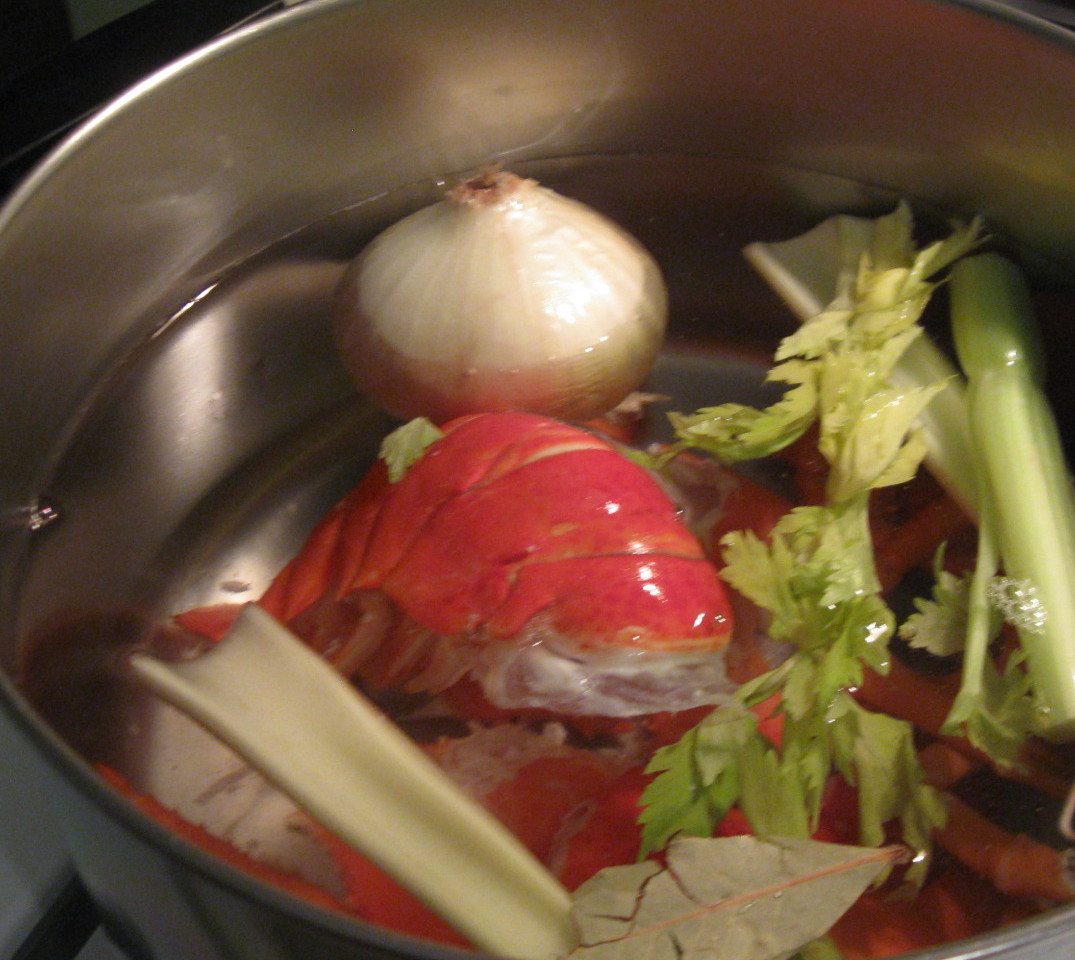
Lobster broth
shells from a cooked lobster
one small whole onion
a rib of celery
bay leaf

Place all ingredients in a stock pot and cover with water. Bring to a boil; then lower the heat and simmer, lid tilted, for about 30 minutes. Strain.


Boiled lobster, the New England way

The Pilgrims enjoyed an abundance of seafood in New England, as Mourt’s Relation, a journal of the Pilgrims at Plymouth, published in 1622, attests:  “This bay is a most hopeful place, innumerable store of fowl, and excellent good, and cannot but be of fish in their seasons; skote (skate), cod, turbot, and herring, we have tasted of, abundance of mussels the greatest and best that ever we saw; crabs and lobsters in their time infinite.”

While the early settlers ate lobster, the crustacean was not considered the delicacy it is today. It rated then about as highly as a piece of chicken today. In Of Plymouth Plantation, William Bradford writes, as more ships arrived with English immigrants, the best dish the original Colonists could offer their friends “was a lobster or a piece of fish without bread or anything else but a cup of fair spring water.”

Lobsters are available in New England year round but certainly not in the same quantities they once were. Many claim autumn is the best time for American lobster. The summer molt is completed, and the lobsters have grown into their new, hardened shells. Most of us simply boil our lobsters—in sea water, preferably, but if no ocean water is readily available, sea-salted water will do. We enjoy cracking open the shells and dipping the succulent meat in melted butter. It’s a messy business, but well worth the effort.

Boiled lobster
Fill a large pot approximately three-quarters full of sea water or salted water. Use two tablespoons of salt per quart of water. Bring the water to a boil. Put in the live lobsters (don't attempt to remove the bands on the front claws), one at a time, cover and bring the water to a boil again. Lower the heat and simmer about 15 minutes for a small lobster (up to 1-1/4 pounds), 20 minutes for a medium lobster (1-1/2 pounds) and 25 minutes for a large lobster.


Monday, September 3, 2012

Machias blues: wild blueberry pie


The wild Maine blueberry is thickly sweet and juicy without being watery like cultivated blueberries. The flavor is incredibly concentrated. If you’ve ever tasted Stonewall Kitchen’s Wild Maine Blueberry Jam, then you know what I mean. In Maine, blueberry season lasts for about three weeks. Depending on which part of the state you're in, the season can begin as early as mid-July and extend into the last week of August. We just returned from a trip to Downeast Maine, where I was able to buy a quart of wild blueberries for $5 from a roadside vendor in Machias. At last, we would have enough blueberries for that elusive blueberry pie. My family was very happy. Here is the recipe for my simple blueberry pie in the Fanny Farmer tradition:

Blueberry pie
Crust:

1-1/2 cups flour
pinch salt
1 stick butter or ½ cup other shortening

½ cup ice water

Add salt to the flour. Cut butter (I use Kate’s from Maine) into cubes and work into flour until mixture resembles coarse crumbs. Add about ½ cup ice water, a little at a time until dough can be worked into a ball. Flatten the ball into a disk, wrap in plastic wrap and refrigerate for at least 30 minutes.

Meanwhile, make the filling:

2-1/2 to 3 cups blueberries (preferably wild)
½ cup sugar

½ teaspoon cinnamon

¼ teaspoon nutmeg
flour for dusting berries

cream or milk for brushing top crust

Dust blueberries with flour. Add sugar and spices.

Now, remove dough from refrigerator and divide. Roll out bottom crust and place in 7-inch pie pan. Add blueberry filling. Roll out top crust and blanket blueberries. Crimp edges of crust to seal in juices. Brush top crust lightly with cream. (If you want a shiny golden crust, brush it lightly with egg wash.) Sprinkle with sugar, if you like. Cut three vents in top crust to allow steam to escape.
Bake pie in a 400-degree oven for 10 minutes; then, turn down the heat to 350 and continue to bake for another 35 to 40 minutes, or until pie is golden. Remove pie from oven and cool. Serve plain or with whipped cream or vanilla ice cream.